The rediscovery of D’entrecasteaux (Dwarf) Owlet-nightjar – Aegotheles plumifer from Normanby Island on 17th November 2026

D’entrecasteaux (Dwarf) Owlet-nightjar is only previously known from four specimens taken in 1883 which are now all in American Museum of Natural History. There were no further sightings until 2003 when Thane Pratt and Michael Moore recorded them on both Fergusson and Normanby. One from Normanby was collected and is now in Hawaii at Bernice Pauahi Bishop Museum.

Barred Owlet-nightjar Aegotheles bennettii has three recognised subspecies, wiedenfeldi, bennettii and plumifer. Plumifer is endemic to the D’entrecasteaux islands of Fergusson, Goodenough and Normanby Island in Milne Bay, Papua New Guinea. The usual elevation of Barred is from sea-level to 800m metres whereas D’entrecasteaux is more of an upland hill species – 465 to 1100m.
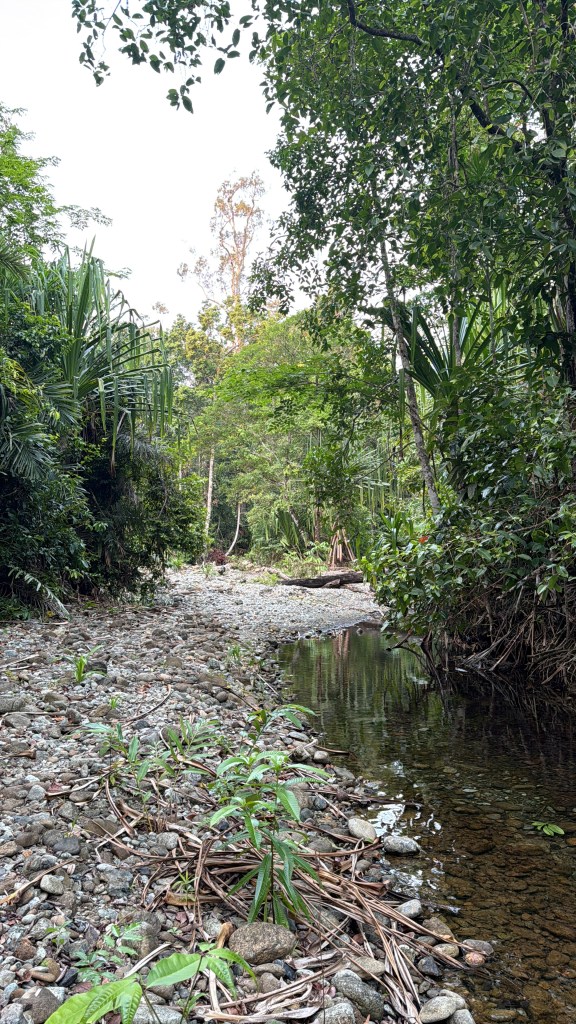
Part of the trail up.

Owlet-nightjars have long fascinated me mainly because of the challenge to see and photograph them not to mention their often-bizarre appearance. After seeing Karimui Owlet-nightjar in 2016 which was driven by my desire to rediscover it after 52 years I was looking for another owlet-nightjar challenge. The plumifer race of Barred seemed a good choice for that challenge as well as it being a good candidate for a ‘new’ species.

So in November 2026 along with my long-suffering birding bud Roger McNeill we set of on a hair brained banana boat journey to the Louisiade Archipelago to search for all the endemic species, once that mission was completed we set about travelling to Normanby. I had been there once before in July 2010, so after seeing the recently split Ochre-bellied Kingfisher I only had one thought which was to get as high as I could on the island aiming for 750m, that was the target elevation I had in mind.
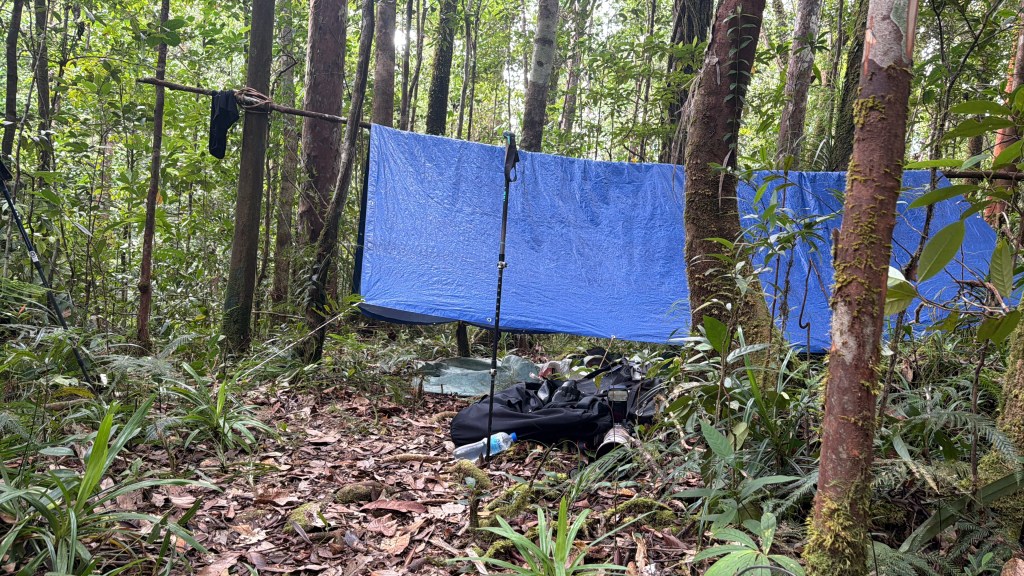
The temporary camp at 550 m

The walk to the Goldie’s Bird-of-Paradise site was around 6km but was a gentle climb with some small river crossings, a little bit tough but nothing too exceptional, very hot and sweaty as expected. After a break to watch the Goldie’s we continued onwards and up aiming to get as far up the trail as possible. The walk was not so easy often walking along the riverbed across the boulders and many stream crossing until we eventually reached some gold miners camps, large blue tarpaulin shelters with enough room to put up two tents and build a fire. As we arrived late in the afternoon, we rested here for the rest of the day and much of the next day before deciding to push upwards to the ridge where I hoped we would find the owlet-nightjar. We set of at 1430 and climbed up to 550m and waited until nightfall. At 1900 as we were drinking some coffee we heard a sound which we immediately recognised as our target, it took some time before I eventually found one in the thermal and we managed to get the spotlights on it, after I had seen it I attempted to get some photographs which was all in the mad scramble to put thermal down, put torch back in my pocket get some balance to take some shots, I fired a few photos off before it flew off, looking at the back of the camera I saw that I had some sharp photos but a large leaf covered its face. What a mix of emotions – we saw it, great – but the desire and need to get great photos perhaps overrides the actual observations so I was actually not so pleased and rather, well you can guess. Roger was happy with his view and the sound recordings so he decided to head back to camp, the long potentially dangerous walk back down in the dark. I was driven by my desire to improve my photos all the time cursing myself on how I should have done better, one step forward maybe or one step to the side and I would have been satisfied. It was indeed a long wait until I heard it again this time lower down, as they were not tape responsive, I had to rely on creeping up and searching with my thermal as I have given up using the recordings I made earlier. This attempt to see was fruitless and as it had gone quiet and no sign in the thermal, I grumpily headed back up to the temporary shelter and drank more coffee, at around 2300 there was more calls from the same place down from the camp so I crept back down and I saw two birds flying around in the thermal and thankfully one perched side on and I was able to get some vastly improved photos, this time head in full view as well, actually pretty good pictures so I was pleased even though I was worried that the flash was bouncing of a closer tree. On this much longer view I was able to note several interesting plumage features I had not seen in that first panicked view.
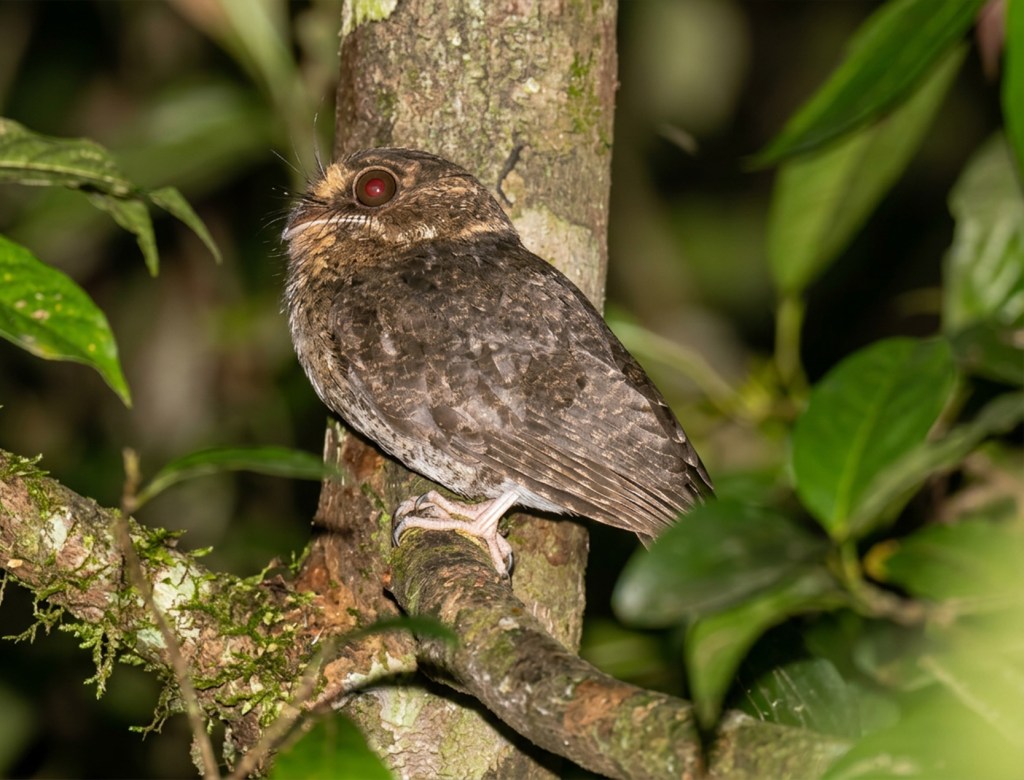
In this photograph there are several areas around the face showing paler buffy areas which is not present in the mainland Barred Owlet-nightjars, the mantle and wing feathers are edged with pale brown rather than the greyer shown on the Barred.
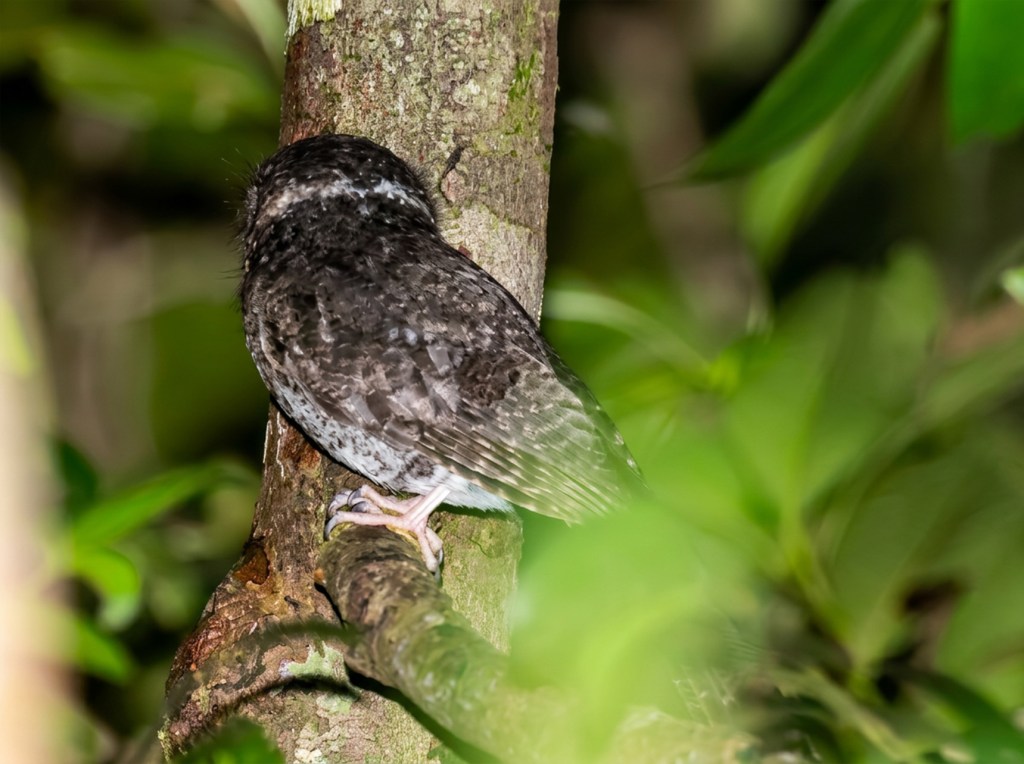
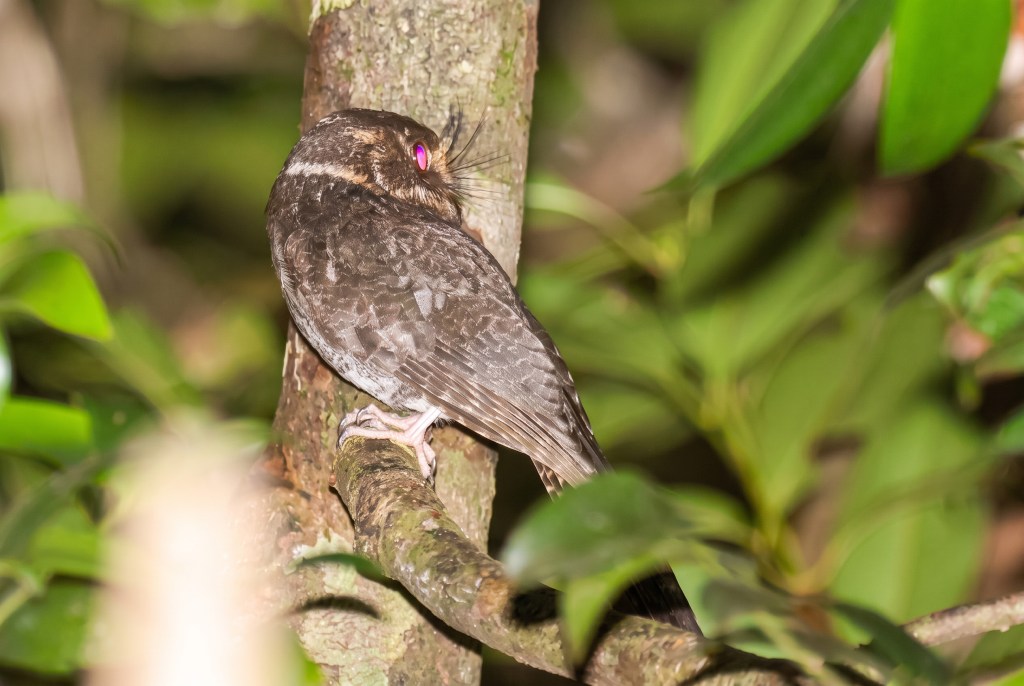
side on view showing the obvious neck collar
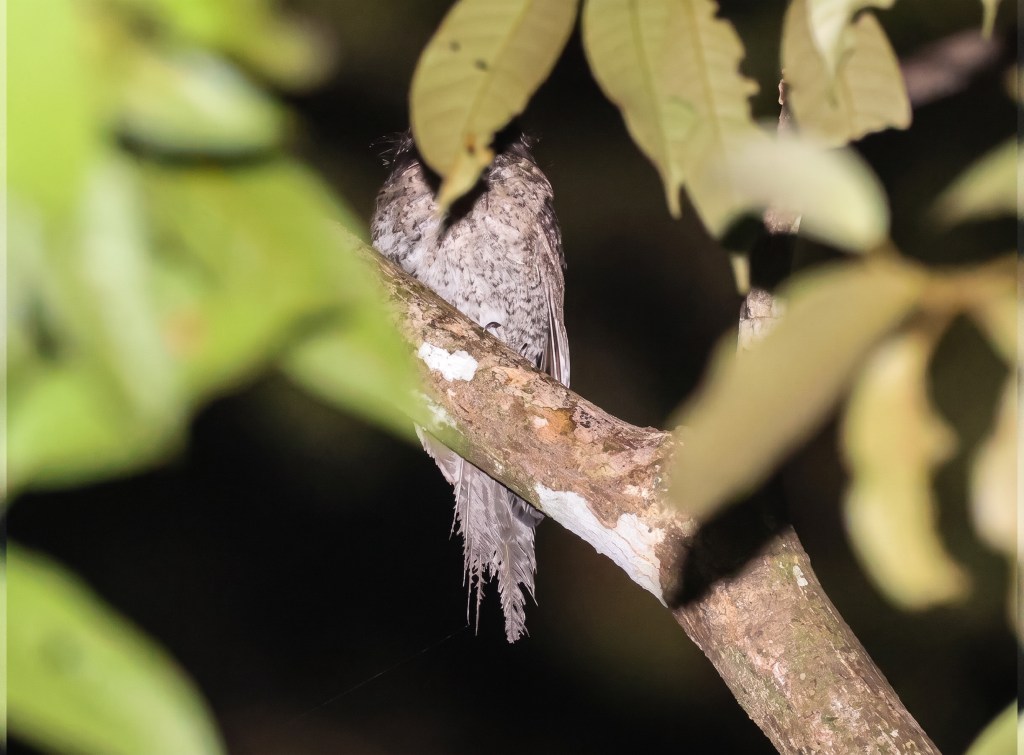
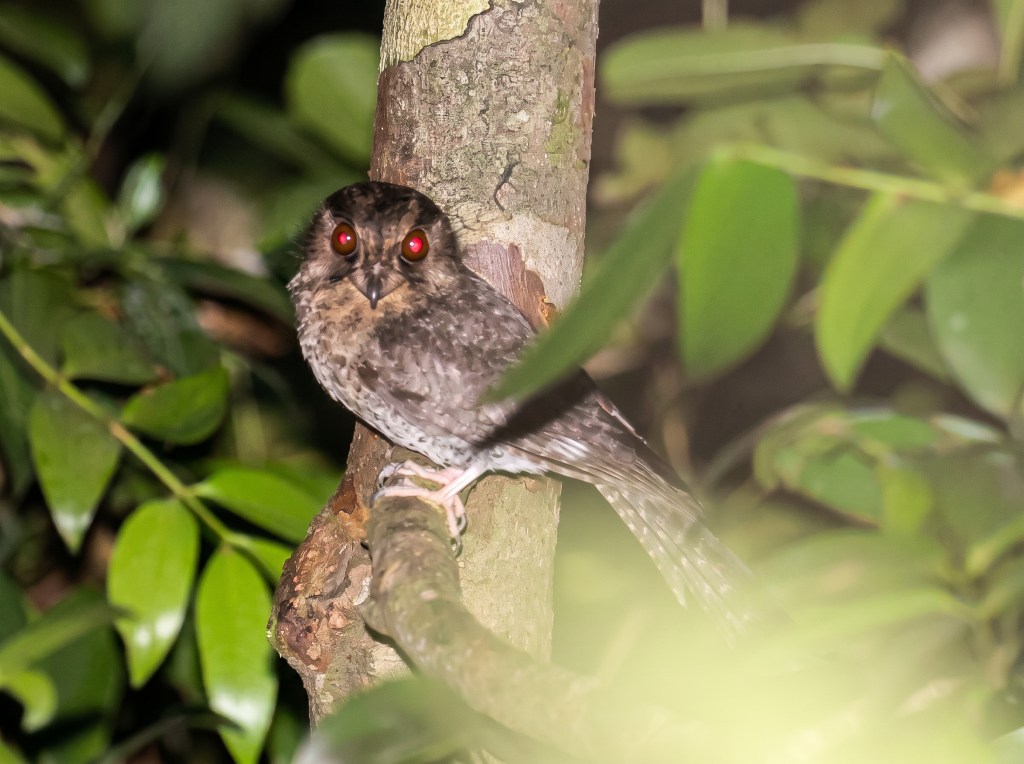
In this the first hurried photo, the light vermiculation’s on the breast can be seen, I have never seen such a worn tail on a nightbird, maybe from being inside a nest hole during the breeding season, if they are at the end of the nesting period it would explain the complete lack of response to playback.
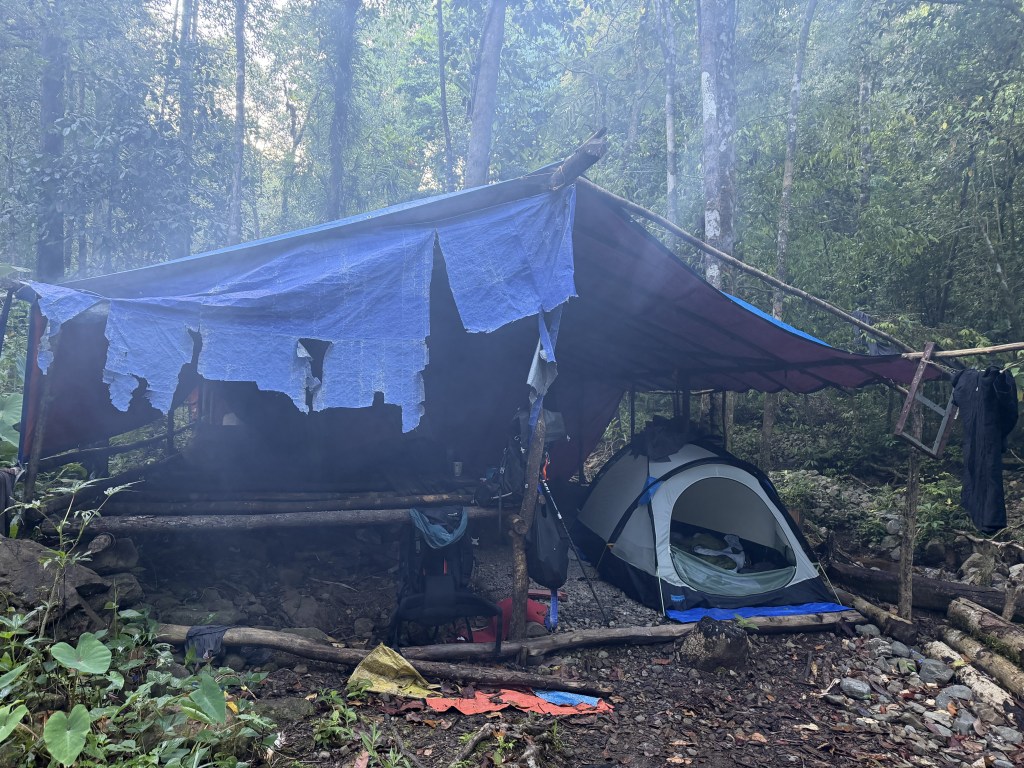
home for a couple of nights
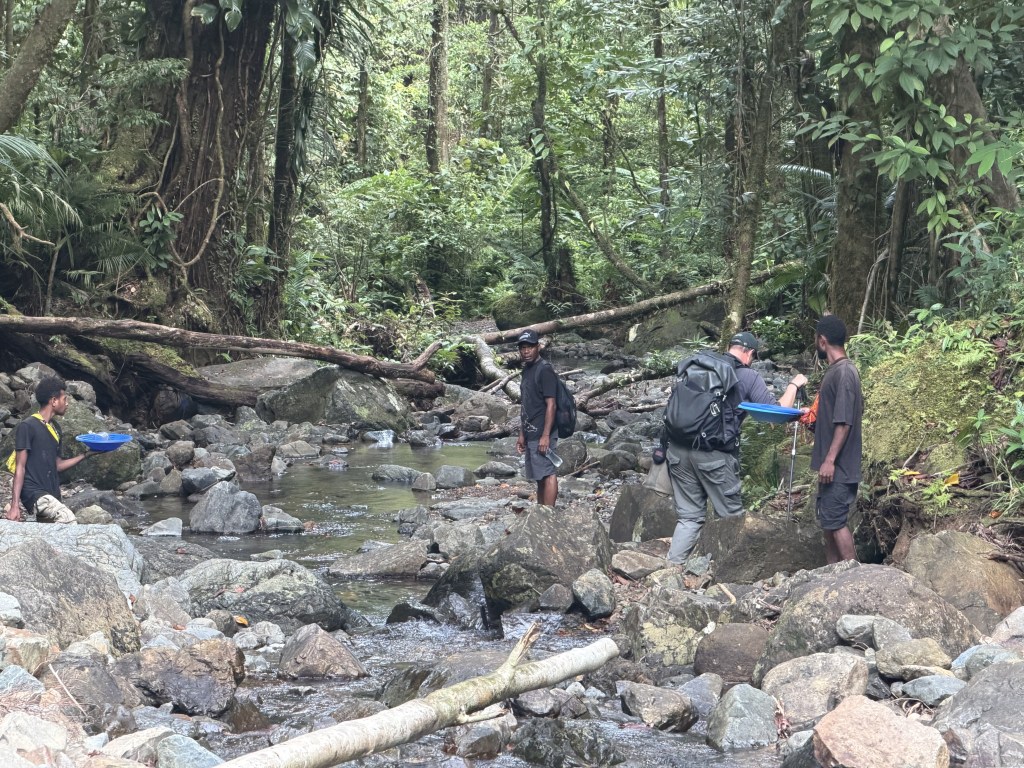
Gold miners looking on as a couple of birders enter their territory
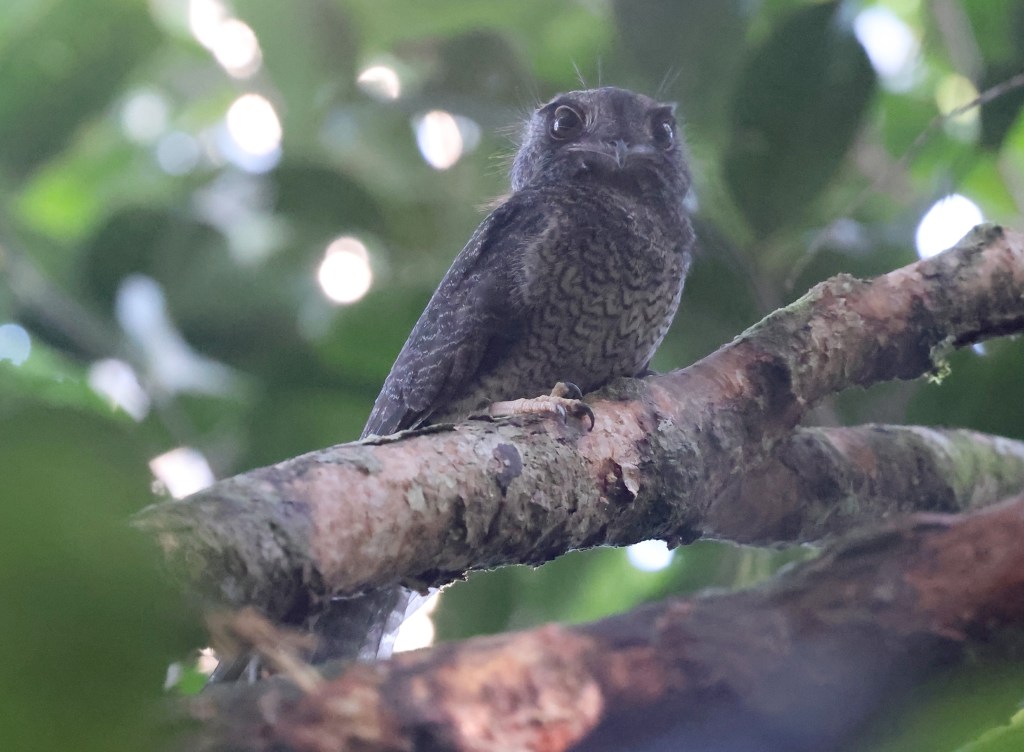
Barred Owlet-nightjar I saw in 2025 showing much heavier V pattern’s on the breast and a much greyer overall appearance.
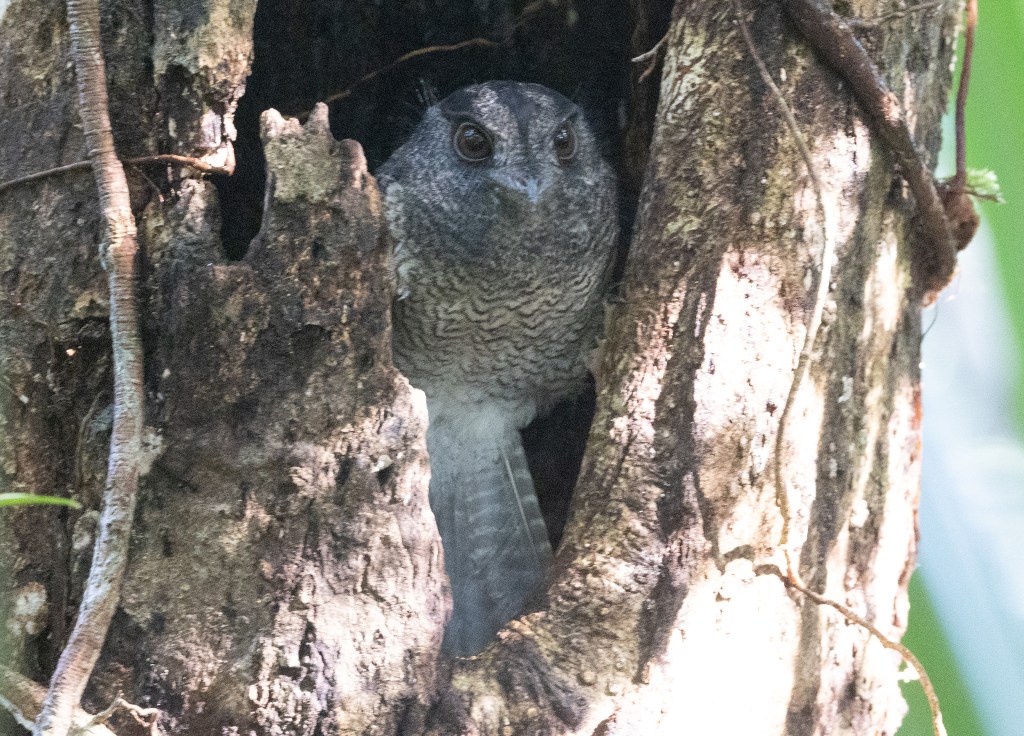
Another photo of the same Barred Owlet-nightjar showing the heavy vermiculation’s on the breast.

The rediscovery of D’entrecasteaux (Dwarf) Owlet-nightjar – Aegotheles plumifer from Normanby Island on 17th November 2026

D’entrecasteaux (Dwarf) Owlet-nightjar is only previously known from four specimens taken in 1883 which are now all in American Museum of Natural History. There were no further sightings until 2003 when Thane Pratt and Michael Moore recorded them on both Fergusson and Normanby. One from Normanby was collected and is now in Hawaii at Bernice Pauahi Bishop Museum.

Barred Owlet-nightjar Aegotheles bennettii has three recognised subspecies, wiedenfeldi, bennettii and plumifer. Plumifer is endemic to the D’entrecasteaux islands of Fergusson, Goodenough and Normanby Island in Milne Bay, Papua New Guinea. The usual elevation of Barred is from sea-level to 800m metres whereas D’entrecasteaux is more of an upland hill species – 465 to 1100m.

Part of the trail up.

Owlet-nightjars have long fascinated me mainly because of the challenge to see and photograph them not to mention their often-bizarre appearance. After seeing Karimui Owlet-nightjar in 2016 which was driven by my desire to rediscover it after 52 years I was looking for another owlet-nightjar challenge. The plumifer race of Barred seemed a good choice for that challenge as well as it being a good candidate for a ‘new’ species.

So in November 2026 along with my long-suffering birding bud Roger McNeill we set of on a hair brained banana boat journey to the Louisiade Archipelago to search for all the endemic species, once that mission was completed we set about travelling to Normanby. I had been there once before in July 2010, so after seeing the recently split Ochre-bellied Kingfisher I only had one thought which was to get as high as I could on the island aiming for 750m, that was the target elevation I had in mind.

The temporary camp at 550 m

The walk to the Goldie’s Bird-of-Paradise site was around 6km but was a gentle climb with some small river crossings, a little bit tough but nothing too exceptional, very hot and sweaty as expected. After a break to watch the Goldie’s we continued onwards and up aiming to get as far up the trail as possible. The walk was not so easy often walking along the riverbed across the boulders and many stream crossing until we eventually reached some gold miners camps, large blue tarpaulin shelters with enough room to put up two tents and build a fire. As we arrived late in the afternoon, we rested here for the rest of the day and much of the next day before deciding to push upwards to the ridge where I hoped we would find the owlet-nightjar. We set of at 1430 and climbed up to 550m and waited until nightfall. At 1900 as we were drinking some coffee we heard a sound which we immediately recognised as our target, it took some time before I eventually found one in the thermal and we managed to get the spotlights on it, after I had seen it I attempted to get some photographs which was all in the mad scramble to put thermal down, put torch back in my pocket get some balance to take some shots, I fired a few photos off before it flew off, looking at the back of the camera I saw that I had some sharp photos but a large leaf covered its face. What a mix of emotions – we saw it, great – but the desire and need to get great photos perhaps overrides the actual observations so I was actually not so pleased and rather, well you can guess. Roger was happy with his view and the sound recordings so he decided to head back to camp, the long potentially dangerous walk back down in the dark. I was driven by my desire to improve my photos all the time cursing myself on how I should have done better, one step forward maybe or one step to the side and I would have been satisfied. It was indeed a long wait until I heard it again this time lower down, as they were not tape responsive, I had to rely on creeping up and searching with my thermal as I have given up using the recordings I made earlier. This attempt to see was fruitless and as it had gone quiet and no sign in the thermal, I grumpily headed back up to the temporary shelter and drank more coffee, at around 2300 there was more calls from the same place down from the camp so I crept back down and I saw two birds flying around in the thermal and thankfully one perched side on and I was able to get some vastly improved photos, this time head in full view as well, actually pretty good pictures so I was pleased even though I was worried that the flash was bouncing of a closer tree. On this much longer view I was able to note several interesting plumage features I had not seen in that first panicked view.

In this photograph there are several areas around the face showing paler buffy areas which is not present in the mainland Barred Owlet-nightjars, the mantle and wing feathers are edged with pale brown rather than the greyer shown on the Barred.

side on view showing the obvious neck collar

In this the first hurried photo, the light vermiculation’s on the breast can be seen, I have never seen such a worn tail on a nightbird, maybe from being inside a nest hole during the breeding season, if they are at the end of the nesting period it would explain the complete lack of response to playback.

home for a couple of nights

Gold miners looking on as a couple of birders enter their territory

Barred Owlet-nightjar I saw in 2025 showing much heavier V pattern’s on the breast and a much greyer overall appearance.

Another photo of the same Barred Owlet-nightjar showing the heavy vermiculation’s on the breast.